Back to Barbecue Basics
By Daniel Hale
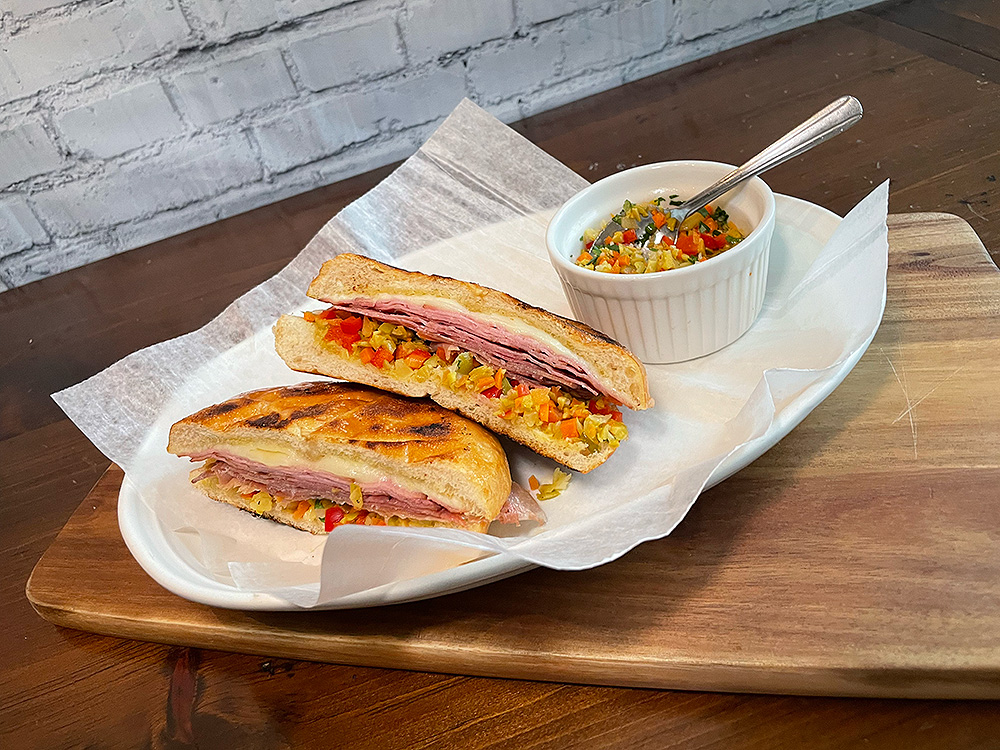
The Muffuletta is traditionally a cold sandwich from New Orleans. But griddling it is a game changer. When you introduce heat to those layers of smoked ham, prosciutto, and sopressata, the cheese melts, the cold cuts sizzle and crisp, and the sandwich goes from excellent to amazing.
For this cook, we’re back on the griddle to use several techniques from Steven’s latest book, Project Griddle.
A Muffuletta is a thick sandwich—too thick to cook all the way through on a griddle. So Steven suggests splitting the sandwich in two and cooking the two halves separately. Make your bottom layer a cold cut—sopressata on one half, ham on the other—the heat of the griddle will make them crisp. The parchment paper keeps the cold cuts and melting cheese from sticking to the griddle.
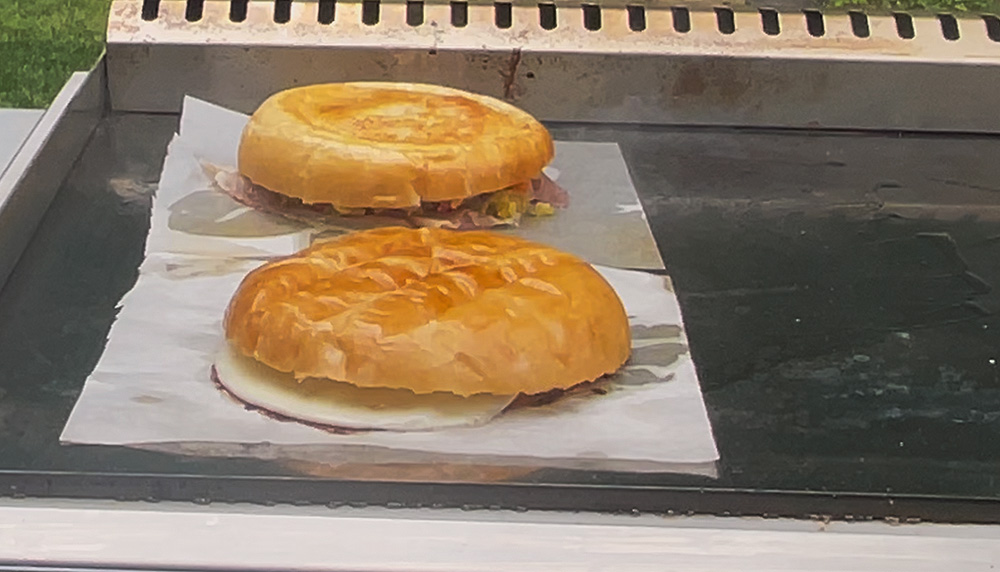
Photo Credit: Daniel Hale
A griddle dome looks like an inverted metal bowl with a handle. When you place it over the muffaletta (or other food), it traps the heat and speeds up the cooking.
One of the most important “basics” of outdoor cooking (and cooking in general) is learning to trust the technique over a rigid ingredient list. Steven’s recipe for Muffuletta calls for sliced coppa, but I couldn’t find any. Instead, I used a high-quality smoked ham.
I also simplified the olive relish. While the traditional version has a long list of ingredients, Steven also offers a “Quick” alternative using giardiniera, olives, capers, and EVOO. Personally, I don’t like capers, so I skipped them entirely. (Steven questions my sanity.)
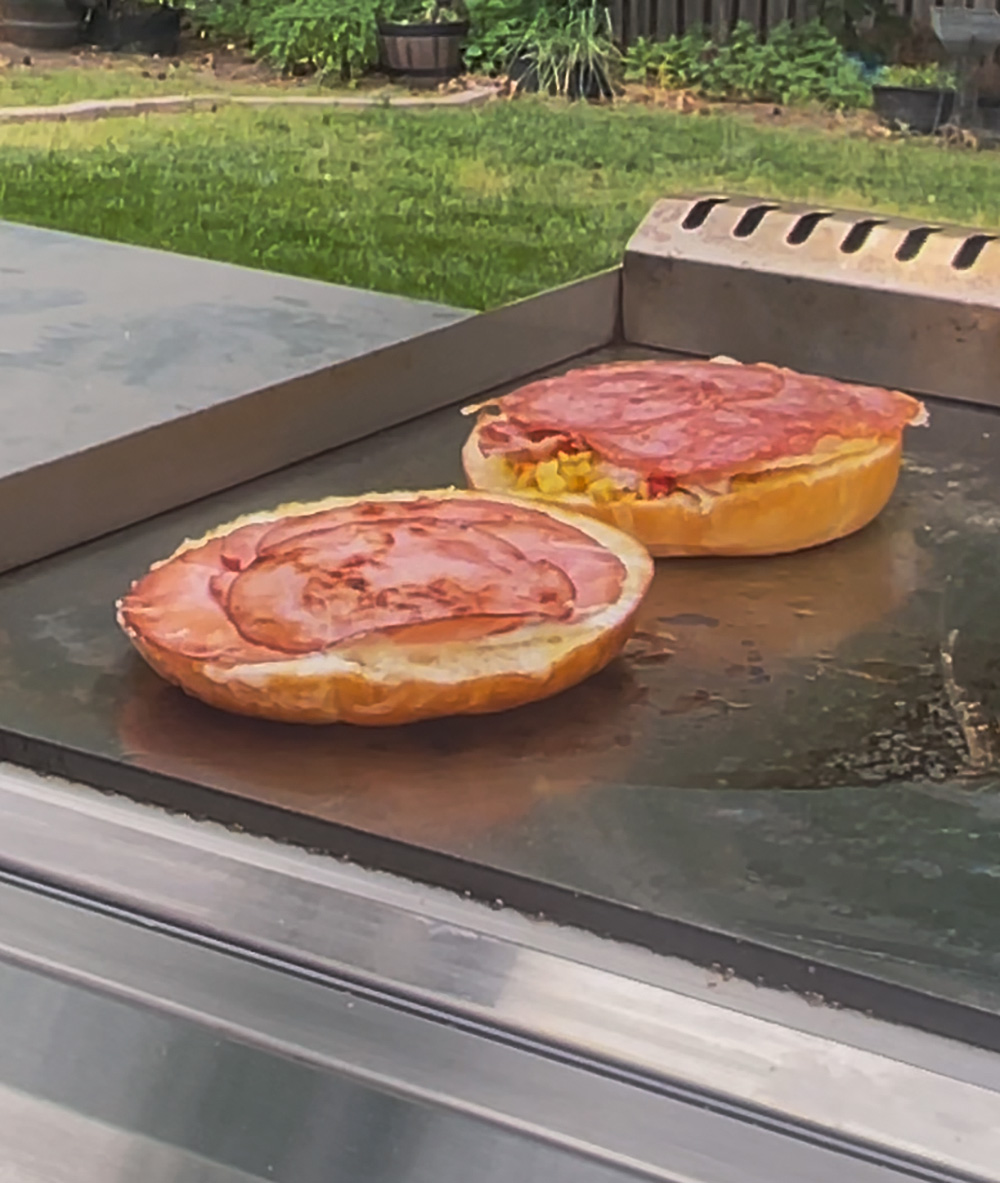
Photo Credit: Daniel Hale
Does that mean it isn’t a Muffuletta? Not at all. The idea here is the flavor profile: you need the salty punch of the meats and the sharp, briny bite of the olives. If you have to swap a meat or streamline your relish, the technique remains the same. And you’re make a great sandwich even better by using heat to marrying those complex flavors together.
Recipes are a roadmap, not a set of handcuffs.
You’ve probably heard about “seasoning.” For most outdoor griddles—usually made of cast iron—seasoning is essential. You apply thin layers of oil and heat them until they bond to the metal to create a black, non-stick patina. Without it, those griddles will rust.
To season your griddle: apply a thin layer of neutral oil and heat it until the surface smokes and darkens, a process called polymerization that creates a stick-resistant patina. Repeating this oiling and heating cycle three times builds a durable, shiny surface that protects the metal and only improves the more you cook.
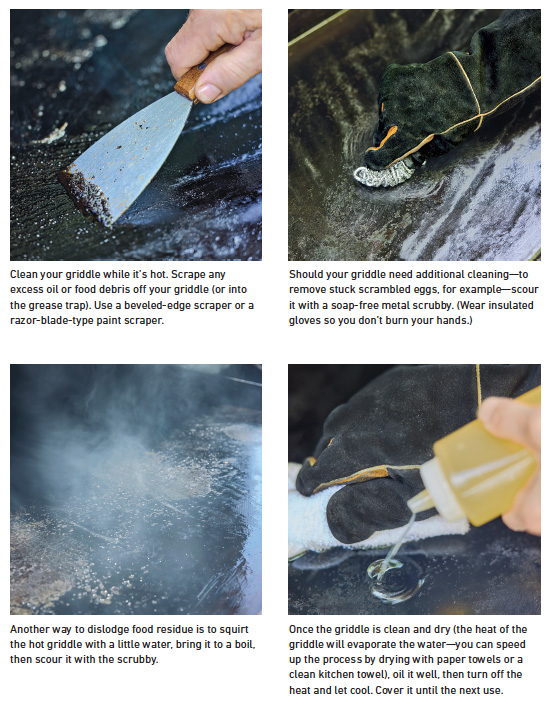
Photo: Project Griddle
However, the rules change when you move to stainless steel.
The Wildfire Ranch 30” Griddle from Wildfire Outdoor Living is made of high-grade stainless steel. This means you do not need to “season” it. In fact, trying to build up a black layer of carbon on stainless steel is counterproductive. You want to maintain the bright, clean surface of the metal.
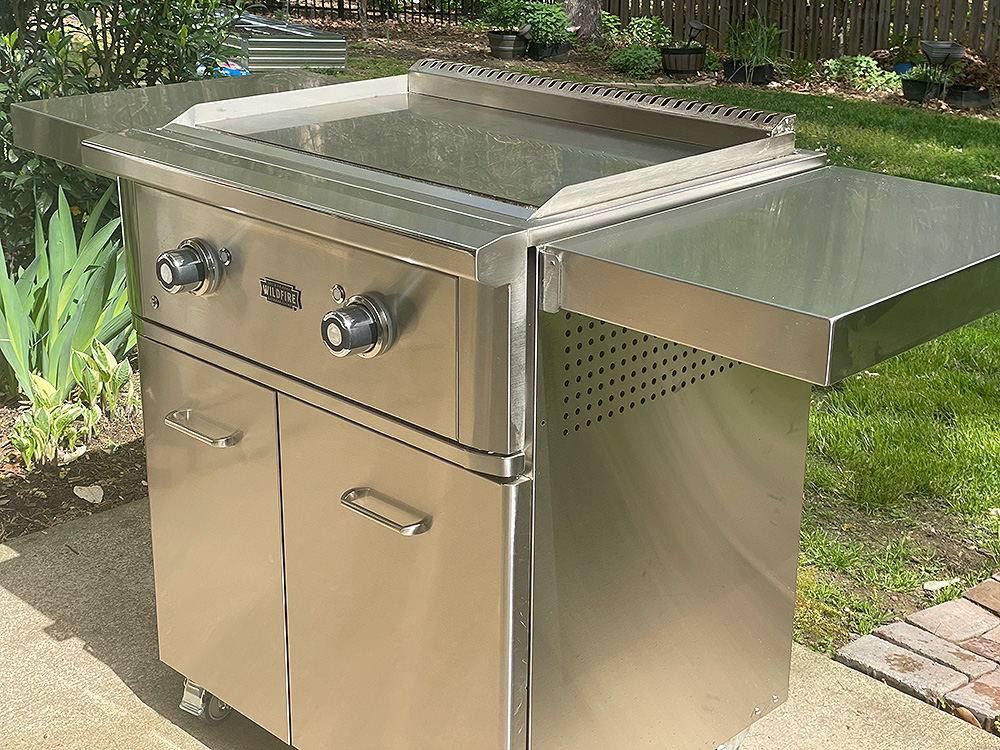
Photo Credit: Daniel Hale
Cooking a muffaletta on the griddle came as a revelation. Thanks to the parchment paper, the sopressata was crisp; the cheese, melty and luscious. The bread achieved a clean, toasted crunch without being weighed down by excess oil. Inside, the smoked ham, prosciutto, and sopressata created a savory, salty core, while the simplified green olive relish provided exactly the sharp, briny kick needed to cut through the richness.
Delectable proof that you don’t need a 20-ingredient list to make a world-class sandwich—you just need the right technique and a hot, even surface.
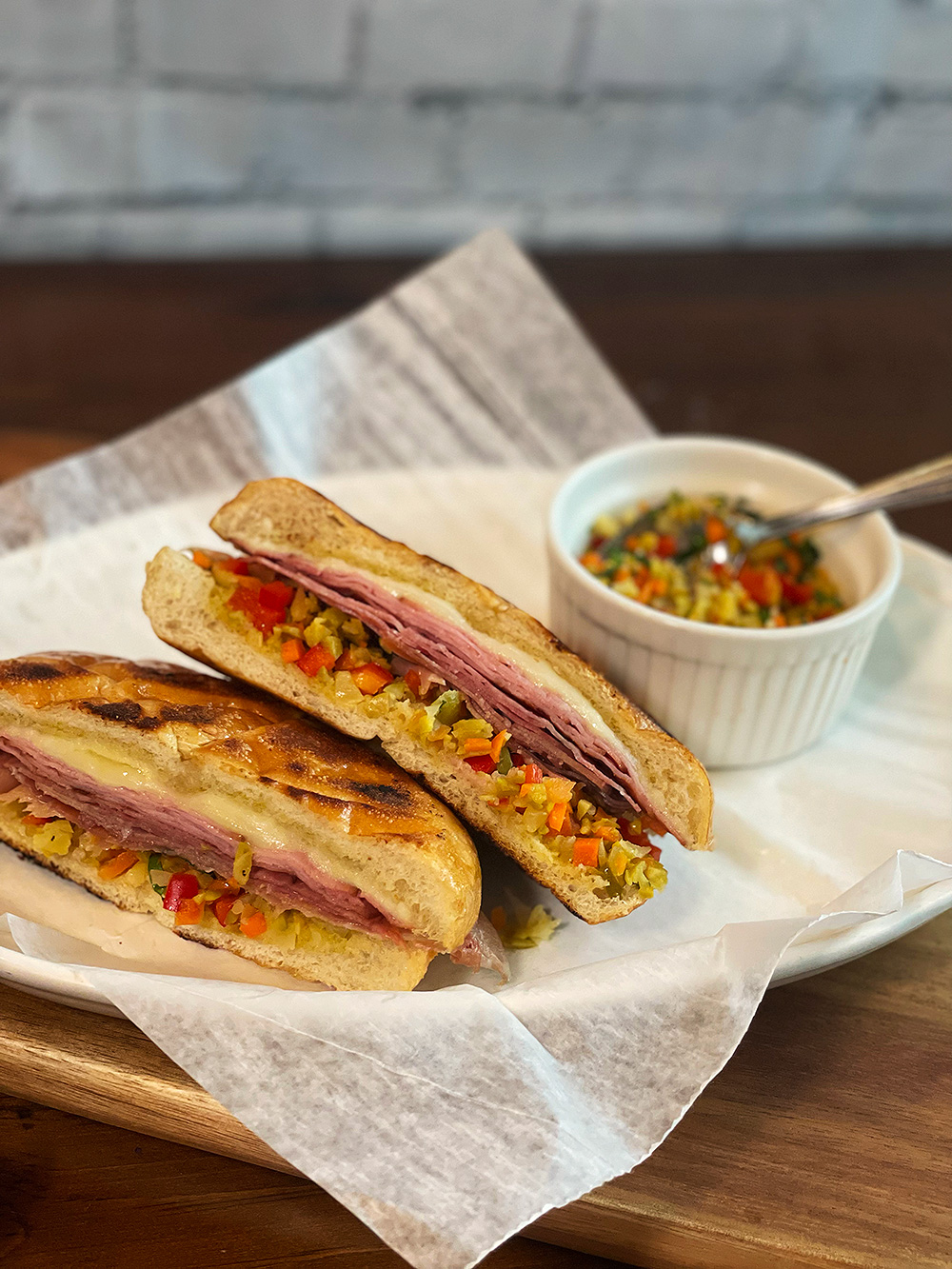
Photo Credit: Daniel Hale
This Muffuletta is the perfect example of why we’re doing this Back to Basics series. Once you understand how your equipment handles heat and how to protect your ingredients, recipes become less of a rulebook and more of a starting point. Keep your griddle clean, trust your technique, and don’t be afraid to make the recipe your own.
Griddle on!
It depends on the material. Rolled steel or cast iron requires a three-step seasoning process to prevent rust and create a non-stick surface. If you are using a 304 stainless steel griddle like the Wildfire Ranch 30”, seasoning is not required; you simply keep the surface clean and polished.
This technique involves placing a sheet of parchment paper between the food and the griddle surface. It helps regulate heat transfer and prevents bread from absorbing too much oil or grease, which is especially helpful for rich, messy sandwiches like the Muffuletta.
Unlike rolled steel, where you want to preserve a black patina, stainless steel should be cleaned back to the bare metal. Use water to deglaze the hot surface immediately after cooking, scrape it clean, and use a stainless-safe cleaner or white vinegar once it’s cool to restore the shine.
Trending Products