
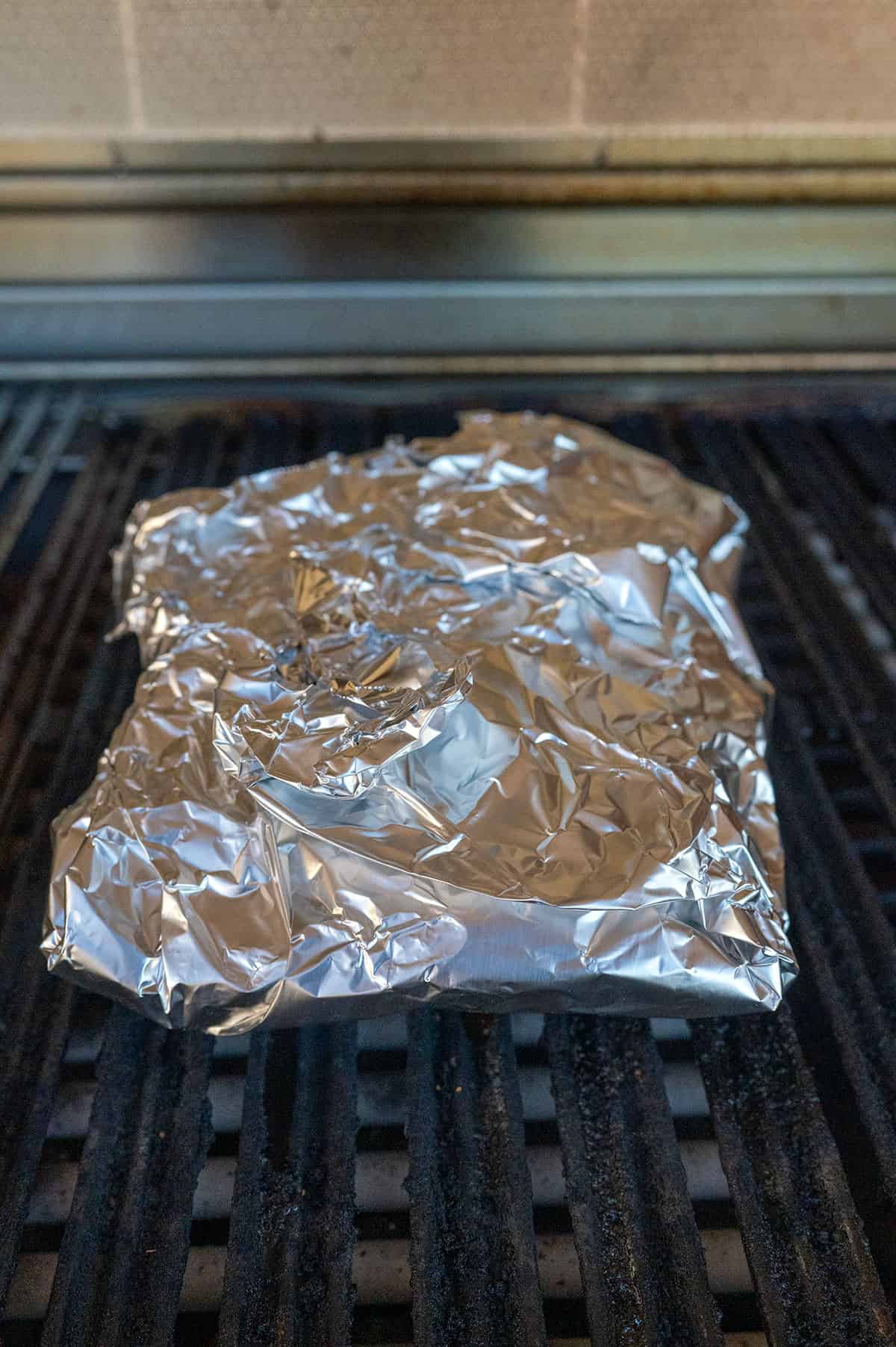
Wrapping brisket in foil, often called the Texas Crutch, is one of the fastest ways to push through the stall and lock in moisture. It’s also the most forgiving wrapping method, which is why many backyard pitmasters start here.
The tradeoff? Ultra-tender slices but a softer bark compared to butcher paper.
This guide is part of my Ultimate Brisket Guide.
Why choose foil over butcher paper
Foil creates a sealed environment around the brisket, which:
- Speeds up the cook dramatically
- Traps juices and rendered fat
- Softens the bark
- Helps protect lean flats from drying out
If you’re cooking Select or lower-marbled briskets, or you’re running short on time, foil is a smart option.
If your #1 priority is a dry, crunchy bark, butcher paper is the better choice.
What you need
Use 18-inch wide heavy-duty foil. Standard kitchen foil tears too easily.
You’ll need:
- 2-4 long sheets of heavy-duty foil
- A flat surface
- Optional: beef tallow, broth or wrap liquid
How to wrap brisket in foil (step-by-step)
Layer and overlap your foil
Lay two sheets of heavy-duty foil on top of each other.
If you’re using 12-inch wide foil, lay down two sheets and overlap them by 6–8 inches to create a wider base. Then, lay two more sheets directly on top for extra strength.
This prevents punctures and keeps juices from escaping.
Place the brisket fat-side down
Position the brisket in the center of the foil. Placing it fat-side down helps protect the flat as it cooks.
Add liquid (optional but recommended)
Adding liquid shifts the cooking method into a gentle braise. Foil holds liquids extremely well, so it’s a great time to add:
- A splash of beef broth or consommé
- A drizzle of tallow
- A light mop
- Girls Can Grill Brisket Rub mixed with liquid to form a glaze
When adding liquid, I recommend folding up the sides to create an edge. This will help prevent the liquid from spilling all over the counter.
Wrap tightly
Lift the bottom layer of foil up and over the brisket, then fold in the sides.
Repeat with the second layer, making sure all seams are tight.
A good foil wrap should be:
- Completely sealed
- Smooth (no sharp ribs or foil points)
- Double-layered for durability
Return to the smoker
Place the wrapped brisket back on the smoker, seam-side down, to prevent leaks.
Continue cooking until it reaches probe tenderness, usually around 203-210F depending on the brisket.
Pros & Cons of the Foil Method
Pros
- Fastest cook time
- Juiciest results
- Great for lean briskets
- Very consistent and beginner-friendly
Cons
- Softer bark
- Risk of puncturing the foil
- Can trap too much steam if overwrapped or too much liquid is added
When foil is the best choice
Use foil if you:
- Want the shortest total cook time
- Need maximum moisture retention
- Are cooking Select/Choice briskets
- Want reliable results without worrying about bark drying out
If you’re cooking in very cold or windy weather, foil also helps stabilize the cook.
Christie’s Pitmaster Take
When I’m cooking on a tight schedule, or when I’m working with a lean brisket, I choose foil. It gives me predictable tenderness and locks in moisture so the flat stays juicy.
When I want a perfect Texas-style bark, I skip foil and go with butcher paper instead. Both methods have a place… you just choose based on the brisket and the day.
Brisket Guides
This BBQ Tip is part of my Ultimate Brisket Guide, which breaks down every step from anatomy to trimming to cooking.
Explore more brisket fundamentals:
For a full overview:

My Go-To Brisket Rub for Building Flavor and Bark
I use Girls Can Grill Brisket Rub on all of my briskets. This blend layers salt, pepper, garlic and savory spices to highlight the natural beef flavor while helping the bark develop evenly.

Trending Products

MASTER COOK 3 Burner BBQ Propane Ga...

SUNLIFER Charcoal Grill Offset Smok...

Realcook Charcoal BBQ Smoker Grill:...

Cocktail Smoker Kit with Torch – ...

Grilling Accessories, Grill Tools, ...

BBQ Grilling Tools Accessories Set ...

SHIZZO Grill Basket Set, Barbecue B...

Odoland 18pcs Camping Cookware Larg...

Dr. Camp 9 PCS Grilling Accessories...
