
A whole beef brisket is made up of two main muscles: the point and the flat. These muscles sit on top of each other and play different roles on the cow, which is why they cook, slice and taste different.
Understanding how each one works is key to mastering brisket anatomy, trimming, seasoning and slicing.
The Point
The point is the thickest part of the brisket and has the most intramuscular fat (marbling). This creates a soft texture and a rich beef flavor.
This muscle does less work on the cow, so it stays naturally tender. It’s also where burnt ends come from.

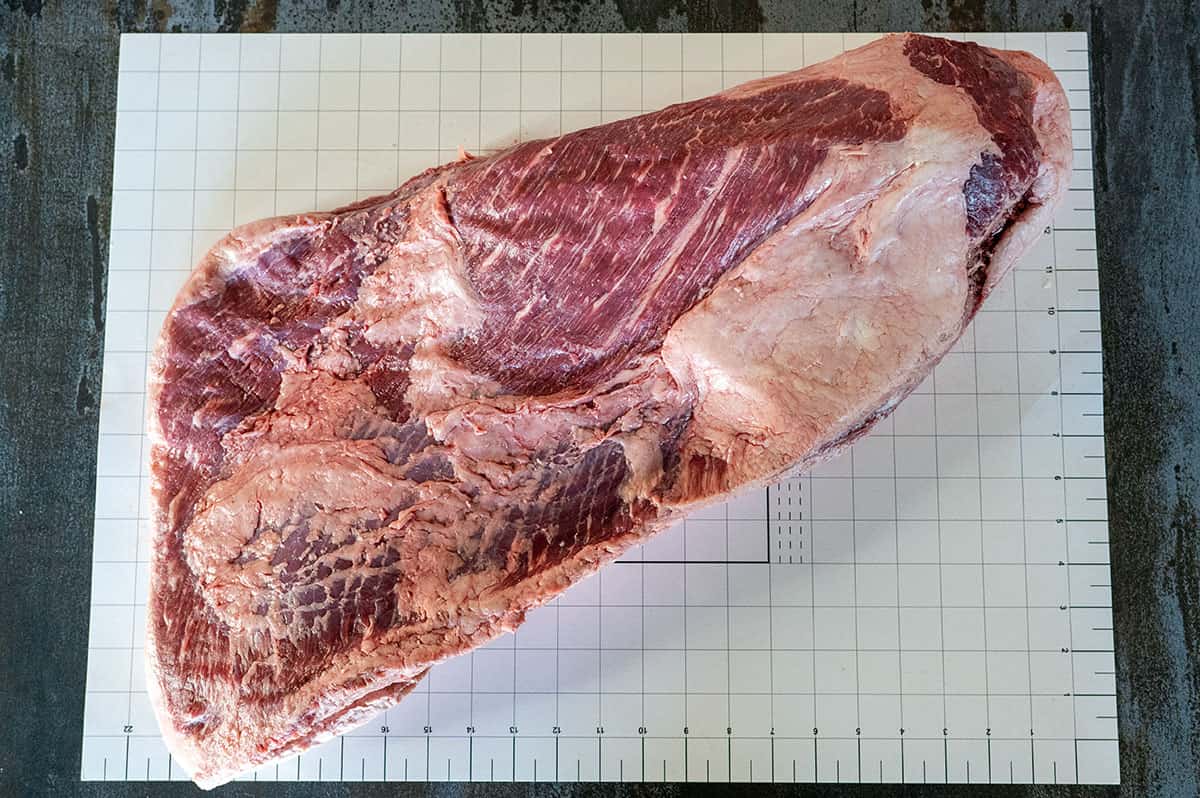
Key traits of the point
- Thick, round and heavily marbled
- Sits on top of the flat
- Soft, juicy texture when cooked
- Best for chopped brisket, burnt ends and rich slices
- Has the richest beef flavor on the brisket
Cooking behavior
The point renders slowly, creating buttery bites and a deep bark. Because of the high fat content, it’s forgiving and hard to overcook. However, if you undercook it and the fat doesn’t fully render, it can be chewy.
The Flat
The flat is the larger, lean, rectangular muscle that sits beneath the point. It does more work on the cow, so it’s naturally firmer and contains less marbling.
This is the section most people recognize from sliced brisket photos.
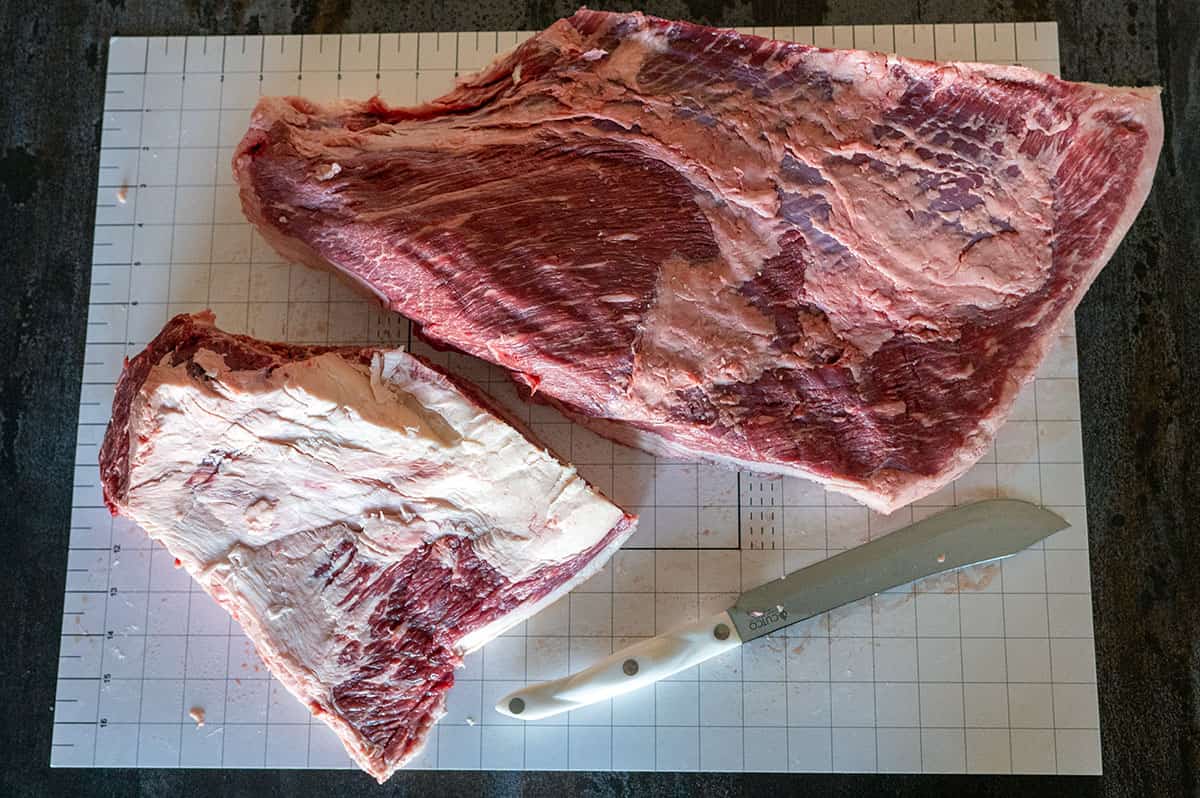
Key traits of the flat
- Lean, long and uniform in shape
- Sits below the point
- Best for clean, even slices
- Lower fat content than the point
- More prone to drying out during cooking
Cooking behavior
The flat benefits from a steady heat source. I use lower temperatures for less marbled flats and higher temps when they are more marbled. Proper slicing against the grain is also critical for a tender bite.
The Fat Cap
Every packer brisket comes with a thick layer of soft fat called the fat cap. This sits primarily on the bottom side of the flat.
Why it matters
- Creates a heat shield to protect the flat
- Helps build bark
- Needs trimming to allow smoke and seasoning to penetrate into the meat
Most pitmasters trim it to about ¼ inch for best results.
Where the Point and Flat Connect
Near where the point and flat meet, you’ll find hard fat and a thick seam of fat. The hard fat is great for tallow, and the seam fat is your guide when trimming or separating the brisket.
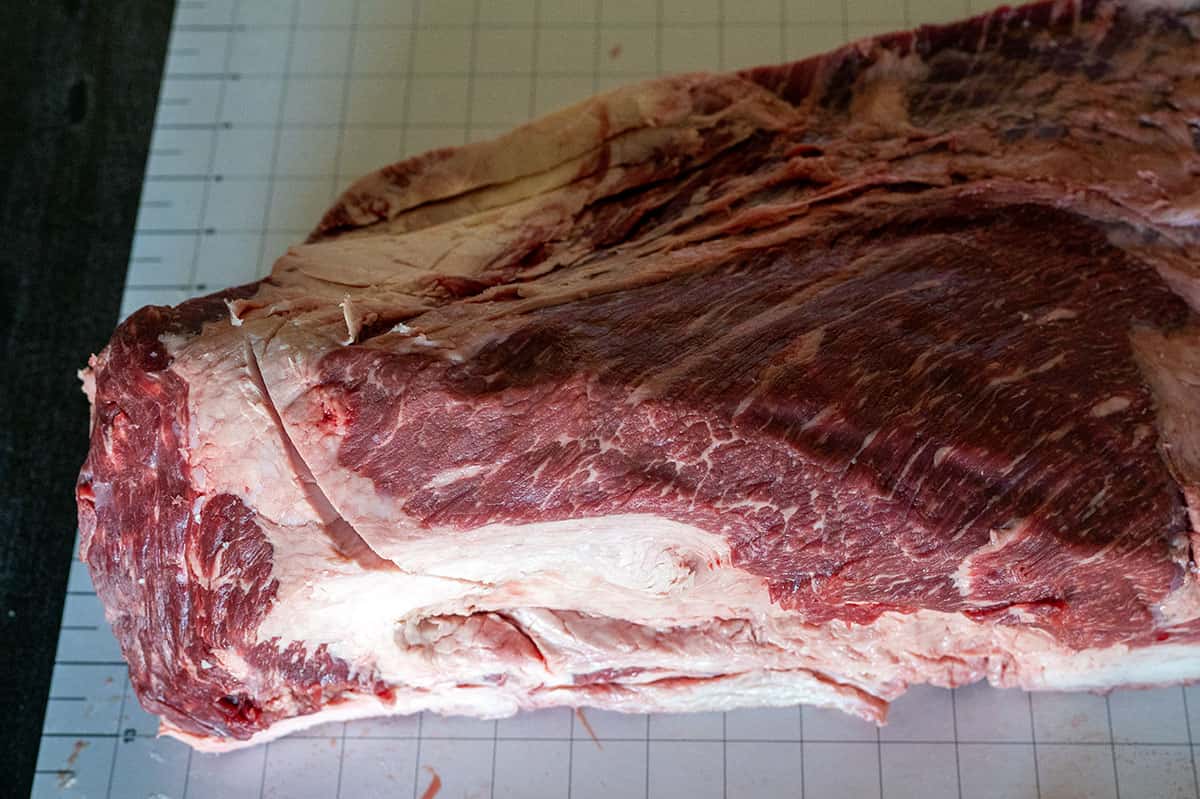
Relationship between the muscles
- The point sits on top and toward the thick end
- The flat lies under the point, tapering toward the thin end
- The seam fat separates them naturally
- This is where you slice the brisket into point and flat after cooking
This internal structure is why brisket cooks unevenly unless trimmed properly.
Brisket Myth: “The deckle is the point.”
Truth: The point is a muscle. The deckle is the fat and connective tissue layer that attaches the brisket to the rib cage. Many people confuse the two, but anatomically they are different.
The Deckle
The deckle is not a muscle.
It’s the fatty, tough connective-tissue layer that sits between the brisket and the rib cage when the cow is whole.
Many people mistake it for the point, but the deckle is:
- a fat seam and membrane
- sometimes left attached by packers
- often trimmed off completely
- NOT the same as the point muscle
On a trimmed packer brisket, you’ll mostly see the seam fat between the point and flat that people casually call the deckle, but anatomically, they are different.
How the Anatomy Affects Cooking
Because the two muscles behave differently, pitmasters use anatomy to guide the cook.
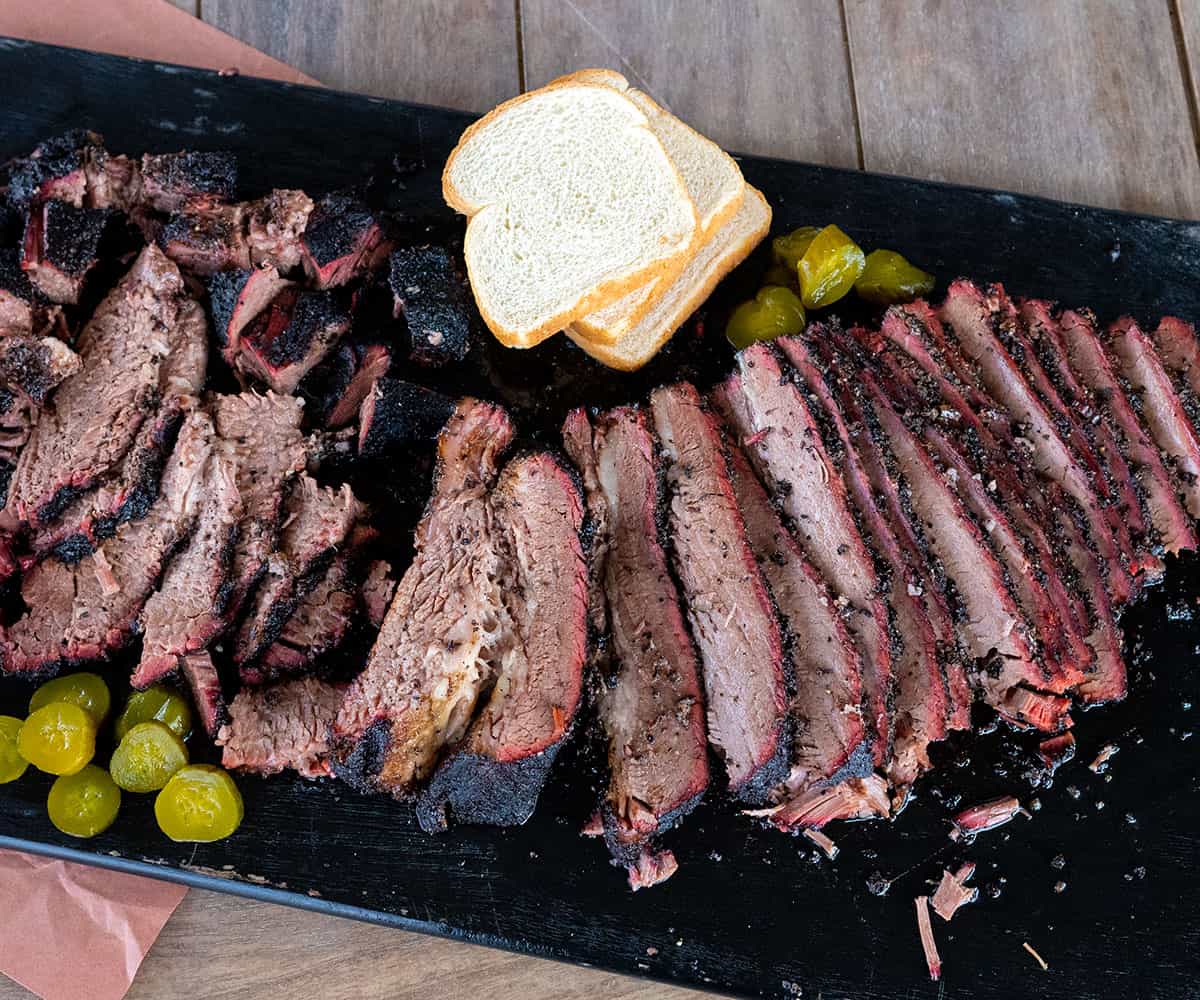
The flat:
- Needs moisture protection
- Slices best at ¼-inch thick
- Can dry out if overcooked
The point:
- Handles heat better
- Renders slowly
- Becomes extremely tender
- Makes ideal burnt ends
Understanding these differences is the secret to restaurant-quality brisket.
How the Anatomy Affects Buying
When shopping for brisket, anatomy helps you choose the right cut.
Look for:
- A thick, even flat
- The point almost always has good marbling, so focus on the marbling in the flat
- Consistent width from end to end
- A fat cap you can trim (not too thick, not too thin)
These traits help you pick a brisket that cooks evenly and slices cleanly.
How the Anatomy Affects Trimming
Your trimming strategy depends on the anatomy:
- Trim the fat cap to ¼ inch for protection
- Remove hard fat that won’t render
- Expose the seam fat between point and flat if you’re separating
- Shape the brisket so the flat cooks evenly
If you want a full walkthrough, see my guide → How to Trim a Brisket
Key Brisket Anatomy Takeaways
- The brisket has two main muscles: point and flat
- The point is fatty, tender and great for burnt ends
- The flat is leaner and best for slices
- The seam fat separates the muscles naturally
- Anatomy guides everything from buying to trimming to cooking
This page is part of my Ultimate Brisket Guide, a full hub that breaks down every part of choosing, prepping and cooking brisket. These guides build on the anatomy concepts:
Choosing a brisket
- Brisket Grades Explained
- Where to Buy Brisket
- How Much Brisket Per Person
Handling a brisket
- How Long to Thaw a Brisket
- How to Trim a Brisket
- How to Separate the Point and Flat
For the full brisket category, visit:

My Go-To Brisket Rub for Building Flavor and Bark
I use Girls Can Grill Brisket Rub on all of my briskets. This blend layers salt, pepper, garlic and savory spices to highlight the natural beef flavor while helping the bark develop evenly.

Trending Products

MASTER COOK 3 Burner BBQ Propane Ga...

SUNLIFER Charcoal Grill Offset Smok...

Realcook Charcoal BBQ Smoker Grill:...

Cocktail Smoker Kit with Torch – ...

Grilling Accessories, Grill Tools, ...

BBQ Grilling Tools Accessories Set ...

SHIZZO Grill Basket Set, Barbecue B...

Odoland 18pcs Camping Cookware Larg...

Dr. Camp 9 PCS Grilling Accessories...
