
If you’re searching for the best miso-glazed salmon recipe, you found it. Here’s exactly what makes it work.
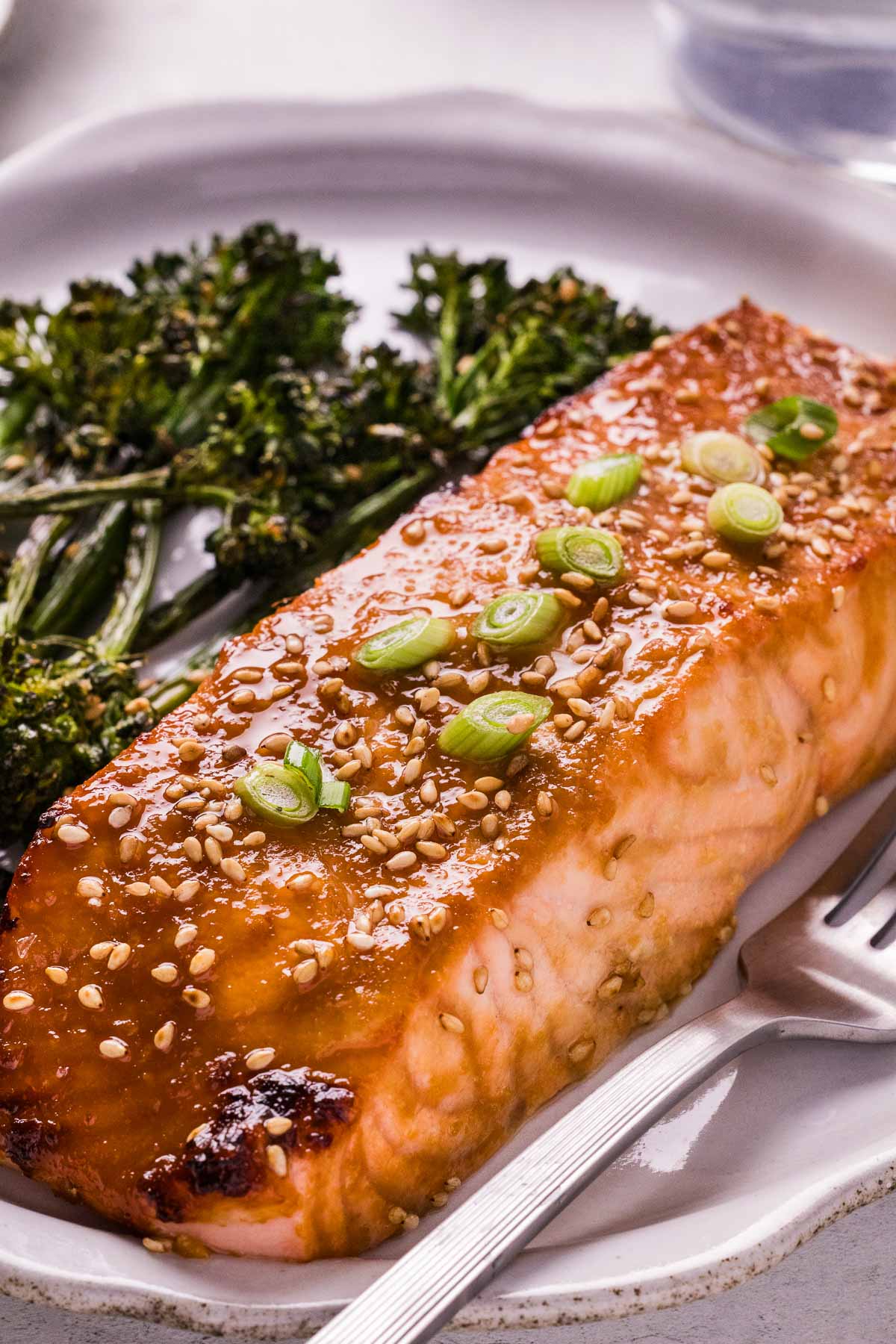
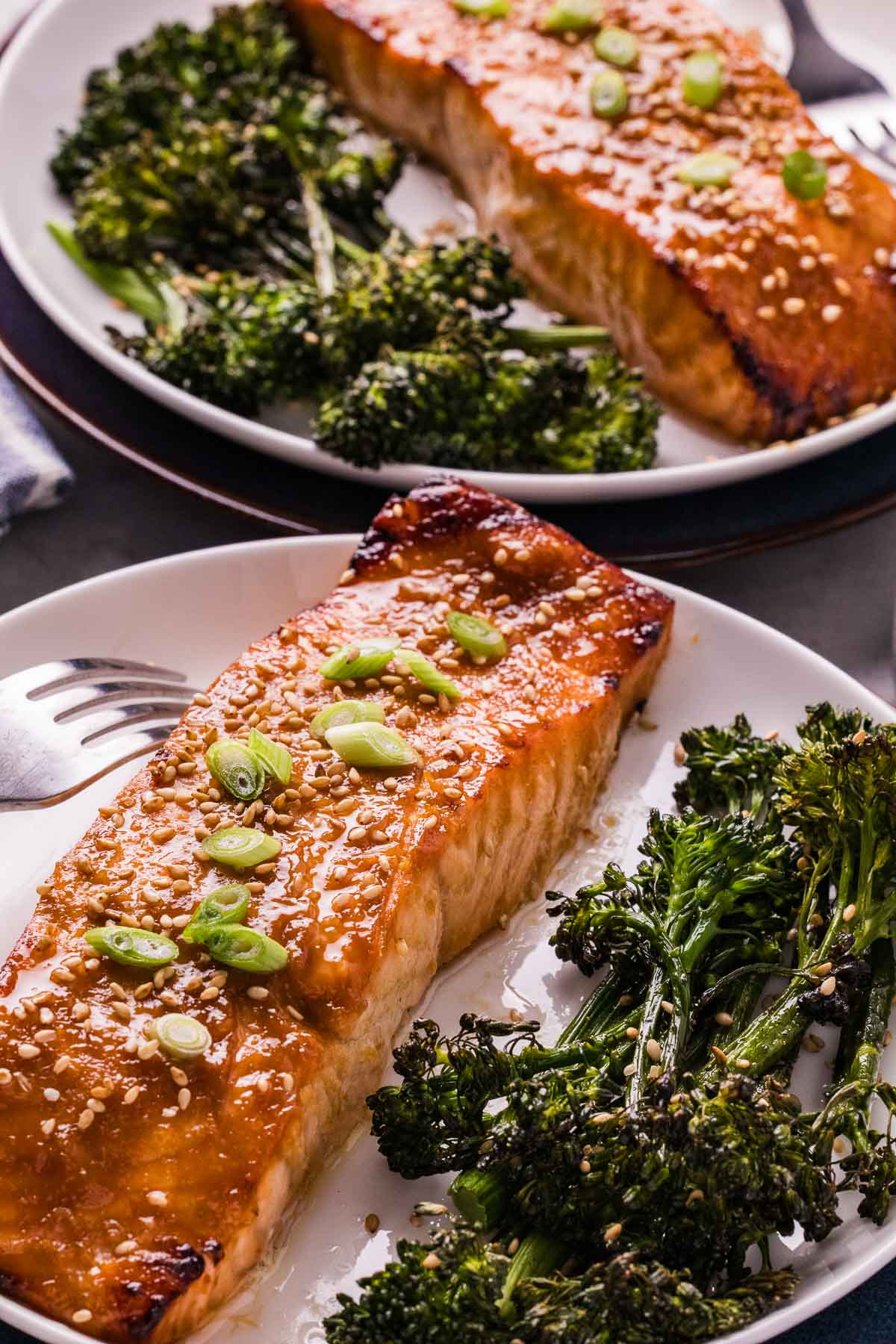
Seven minutes under the broiler. That’s it. And not “close enough” actually done but not overcooked and dried out with a caramelized glaze and salmon that pulls apart in clean, delicious flakes, with tiny fat pockets visible on the sides telling you it hit the sweet spot.
Most miso salmon recipes fail in the same two ways: they either drown the fish in glaze until it turns to mush, or they bake it so long, chasing color, that the fish dries out and the sugars in the honey burn. This version fixes both. Broil on low, on the second-highest rack, with the reserved glaze brushed on right before it hits the heat; that’s how you get deep color AND bold flavor without scorching.
You’ll want white miso, not red; it’s cleaner and less aggressive, perfect for fish recipes. Fresh ginger, not ground. And real lime, not the bottle. Small tweaks like this add up to a miso glaze that’s savory, a little sweet, and sharp enough to cut the richness of the fish without overpowering it.
Why This Miso Glaze Works
Miso is packed with glutamates, the compounds responsible for umami. When combined with honey and broiled at high heat, the natural sugars caramelize quickly, forming a savory crust before the salmon overcooks.
The soy and vinegar balance salt and acidity, while ginger and garlic add volatile aromatics that bloom under heat. The result is layered flavor in minutes.
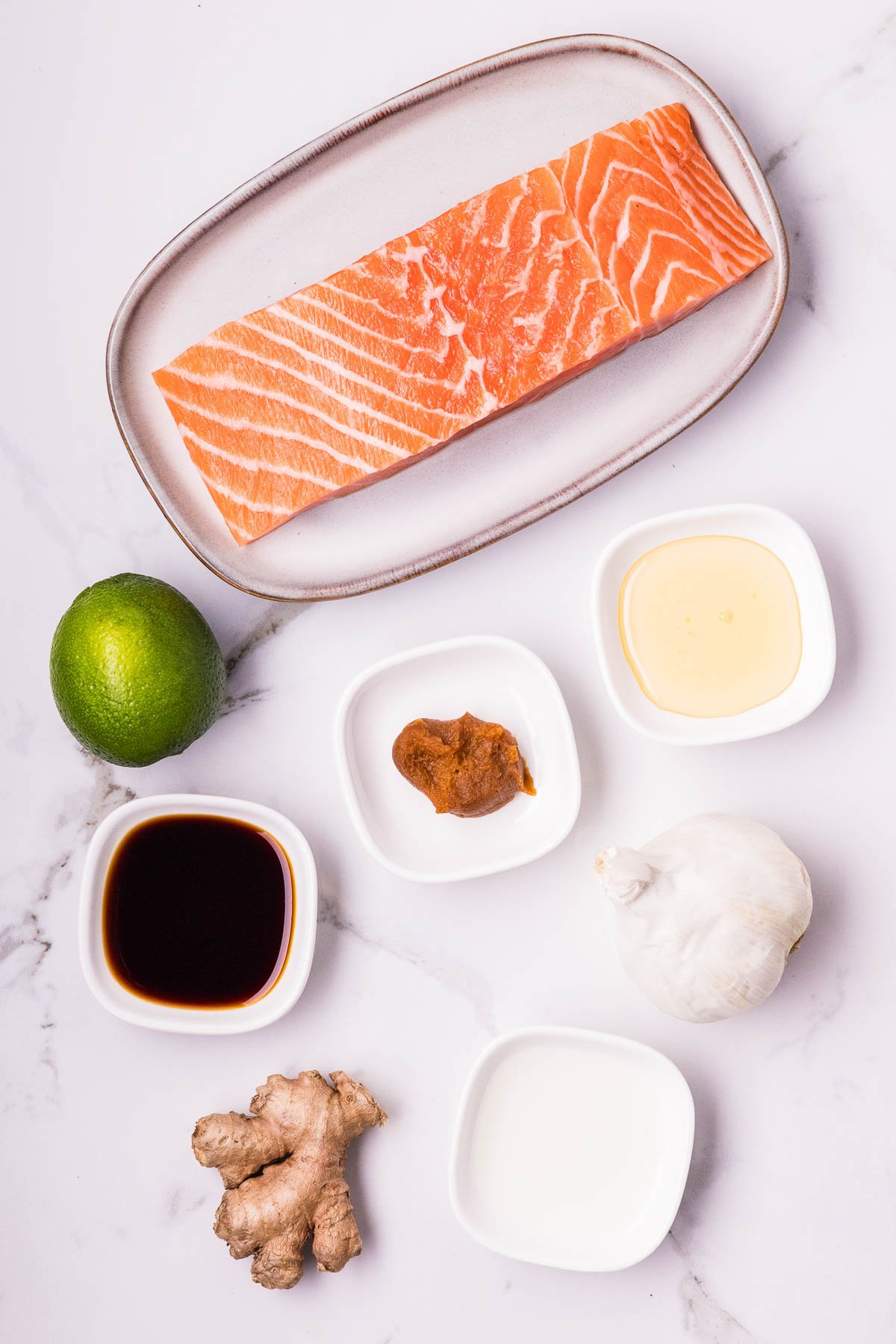
🔪 Ingredients for Miso Glazed Salmon
- White miso paste: the backbone of the glaze; mild, slightly sweet, and deeply savory. White miso is milder and slightly sweet, which makes it ideal for glazing fish. I use this brand because it’s consistent and easy to find
- Soy sauce: reinforces the salt and umami (tamari for gluten-free)
- Rice vinegar: adds brightness without sharp acidity
- Fresh ginger and garlic: clean heat; use fresh for the right bite
- Honey: balances the salt and helps the glaze caramelize
- Fresh lime juice: sharpens everything up at the end
- Salmon fillets: skin on or off; center-cut portions cook most evenly. If using a large side of salmon, cut it into even portions before marinating so they cook at the same rate.
Equipment
- Mixing bowl
- Basting brush
- Foil-lined baking sheet
- Instant-read thermometer (highly recommended)
📝 How to Make Miso Glazed Salmon
- Make the glaze
- Whisk together miso paste, soy sauce, rice vinegar, ginger, garlic, honey, and lime juice until smooth.
- Reserve 1–2 tablespoons before adding the fish. This ensures you’re brushing on clean glaze, not marinade that touched raw salmon.
- Marinate the salmon
- Place salmon in a resealable bag or shallow dish. Pour the glaze over it and coat evenly.
Marinate at least 30 minutes and up to 8 hours. - Longer marinating deepens flavor, but isn’t required; this glaze works fast.
- Place salmon in a resealable bag or shallow dish. Pour the glaze over it and coat evenly.
- Broil for caramelized color
- Preheat the broiler on low and position a rack on the second-highest level.
- Place the salmon skin-side down on a foil-lined baking sheet. Brush with reserved glaze.
- Broil 5–7 minutes, then 1–2 more minutes if needed for deeper color.
- You’re looking for:
- Slight browning and caramelization on top
- White albumin just beginning to bead along the edges
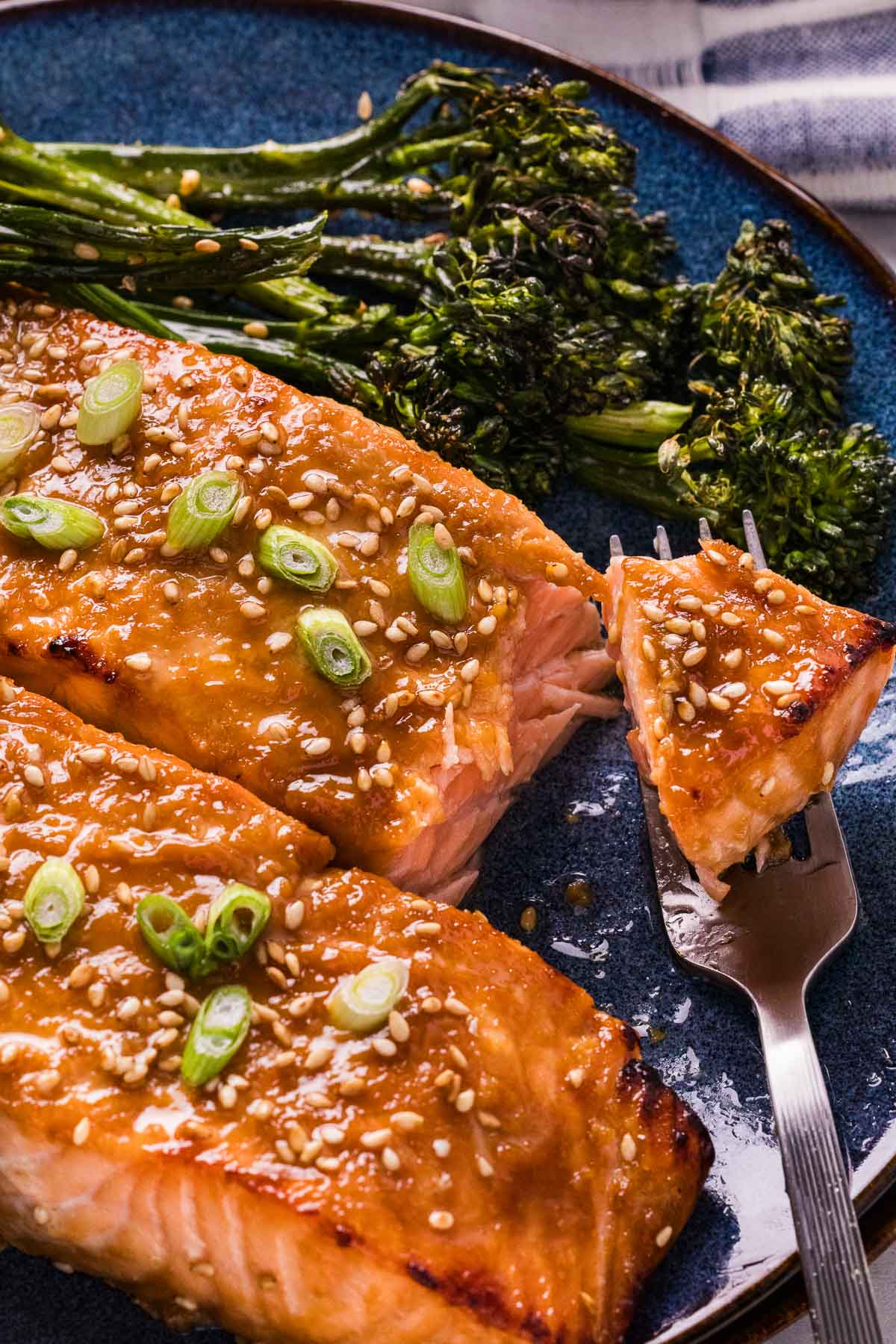
- Flesh that flakes into large, moist sheets
- An internal temp between 125°F–135°F for tender, medium doneness. Here’s exactly how to tell when salmon is done.
- Pull it slightly under your ideal temp—it will carryover cook while resting.
- Alternate baking method
- Bake at 400°F for 11–14 minutes, depending on thickness.
- Finish under the broiler 1–2 minutes for a little color.
🔄 Substitutions & Variations
- Tamari for gluten-free
- Coconut aminos for soy-free (slightly sweeter result)
- Apple cider vinegar if you don’t have rice vinegar
- Maple syrup instead of honey for a deeper sweetness
- Add chili paste for heat
💡 Meat Nerd Tips
- Thickness matters. A 1-inch fillet cooks differently from a thin tail piece. Adjust time, not temperature.
- Don’t over-broil. When albumin (the white pockets you see when cooking salmon) dries out and disappears, the fish is already overcooked.
- Use foil, not parchment. Parchment can scorch under the broiler.
- Pat the salmon dry before marinating if it was previously frozen to help the glaze cling better.
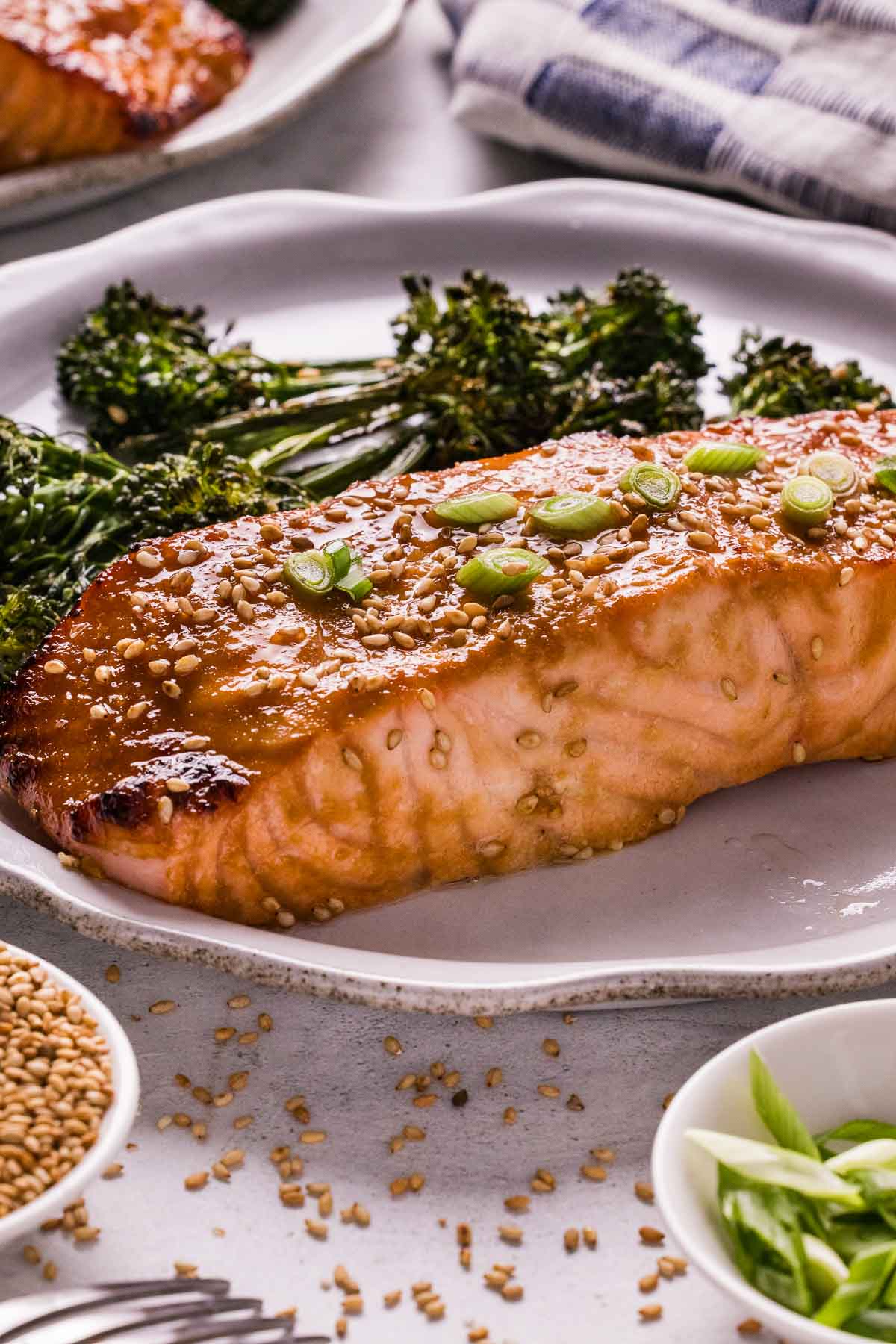
🍽️ How to Serve Miso Glazed Salmon
- Over jasmine or sticky rice
- With grilled bok choy or blistered green beans
- Flaked into a grain bowl
- Alongside cucumber salad for contrast
🧊 Storage & Reheating
- Store leftovers in an airtight container up to 3 days.
- Reheat gently at 275°F just until warmed through, or enjoy cold over rice or greens.
- Do not microwave on high—it will tighten the proteins and dry the fish.
For best results, cook salmon within 24 hours of purchasing.
Have you tried this recipe? Do us a favor and rate the recipe card with the ⭐ ⭐ ⭐ ⭐ ⭐ and drop a comment to help out the next reader.
Craving boujie salmon? The glaze does all the heavy lifting here: miso, ginger, garlic, lime, and honey come together into something that caramelizes under the broiler into a lacquered, sticky crust you’ll want to eat straight off the pan. Thirty minutes of marinating, seven minutes under heat, and nobody needs to know how easy it was.
Prevent your screen from going to sleep
Marinate the Salmon in the Glaze
-
Combine all ingredients except the salmon in a bowl. Reserve 1-2 Tablespoons of the sauce and set it aside.
-
Place the salmon fillets in a resealable bag (skin side down, if necessary), pour the sauce into the bag, seal it, and lay the salmon flat in the refrigerator.
-
Marinate the salmon for at least 30 minutes or up to 8 hours.
Broil the Salmon
-
Place the marinated salmon on a foil-lined baking sheet, skin-side down if necessary.
-
Brush with the reserved sauce.
-
Broil on low on the second-highest rack in the oven for 5-7 minutes.
-
Broil for 1-2 more minutes, if needed, to achieve the desired color.
-
Salmon is finished when small white fat pockets are visible on the sides, and the thickest part flakes with a fork, and has reached an internal temperature of 125°F to 140°F at the thickest part.
- Internal Temp Target: Cook salmon to 125–135°F at the thickest part for tender, flaky results. Pull it at 120–125°F if you prefer it slightly more medium-rare; it will rise 5 to 7 degrees while resting.
- Broiler Watch: Broilers vary wildly. Stay nearby on watch to prevent the glaze from burning.
- Avoid Dry Fish: Large amounts of white albumin mean the salmon was overcooked. A small amount is normal.
- Foil Only: Do not use parchment under the broiler; it can scorch quickly under the high heat.
- Make It Ahead: Mix the glaze up to 3 days in advance and refrigerate. Stir before using.
- Portion Evenly: If using a whole side of salmon, cut into equal portions before marinating so everything cooks evenly.
- Marinating Time: 30 minutes is plenty. Marinating for longer than 8 hours can change the texture of the fish due to the salt in the miso and soy.
- Leftovers Tip: Flake chilled salmon into rice bowls or tuck into lettuce wraps instead of reheating if you want to keep it extra tender.
Serving: 1serving | Calories: 200kcal | Carbohydrates: 6g | Protein: 25g | Fat: 8g | Saturated Fat: 1g | Polyunsaturated Fat: 3g | Monounsaturated Fat: 3g | Cholesterol: 62mg | Sodium: 778mg | Potassium: 611mg | Fiber: 1g | Sugar: 2g | Vitamin A: 58IU | Vitamin C: 2mg | Calcium: 26mg | Iron: 1mg
❓ FAQs
Salmon is done when it flakes easily into moist sheets and reaches an internal temperature between 125°F and 135°F at the thickest part. You may see small white albumin beads forming on the sides. If the flesh feels very firm and dry, it has overcooked.
Broiling results in faster caramelization and a better glaze color. Baking offers more gentle, even cooking. For best results, bake first and finish with a short broil for color.
Yes, up to 8 hours is ideal. Because miso and soy are salty, longer than that can start to firm the texture too much.
That white substance is albumin, a protein that tightens and forms a surface as salmon cooks. A small amount is normal. Large amounts mean the salmon was cooked at too high a temperature or for too long.
Yes. Thaw completely and pat dry before marinating so the glaze adheres properly.
Absolutely. It’s excellent chilled over rice or greens the next day.
More Salmon Basics
Want dishes that use these techniques? Explore all our Seafood Recipes.

Trending Products

MASTER COOK 3 Burner BBQ Propane Ga...

SUNLIFER Charcoal Grill Offset Smok...

Realcook Charcoal BBQ Smoker Grill:...

Cocktail Smoker Kit with Torch – ...

Grilling Accessories, Grill Tools, ...

BBQ Grilling Tools Accessories Set ...

SHIZZO Grill Basket Set, Barbecue B...

Odoland 18pcs Camping Cookware Larg...

Dr. Camp 9 PCS Grilling Accessories...
