
Evenly portioned salmon cooks better, plates cleaner, and gives you far more control. This guide walks you through the simple technique chefs use to turn one big fillet into perfect portions every time.
🔪 What You Need
- Sharp knife (boning knife or chef’s knife)
- Cutting board
- Paper towels
📝 Step-by-Step: How to Portion Salmon
1. Pat the salmon dry
Moisture = slipping. Dry salmon = precision and clean cuts.
Blot all sides with paper towels before you start.
2. Square off the tapered tail
The thin end cooks faster and dries out.
Trim it off and save it for:
- tartare
- curry
- salmon cakes
- quick sautés
This leaves you with a fillet that cooks evenly.
3. Slice across the fillet, not along it
- Position the fillet lengthwise in front of you.
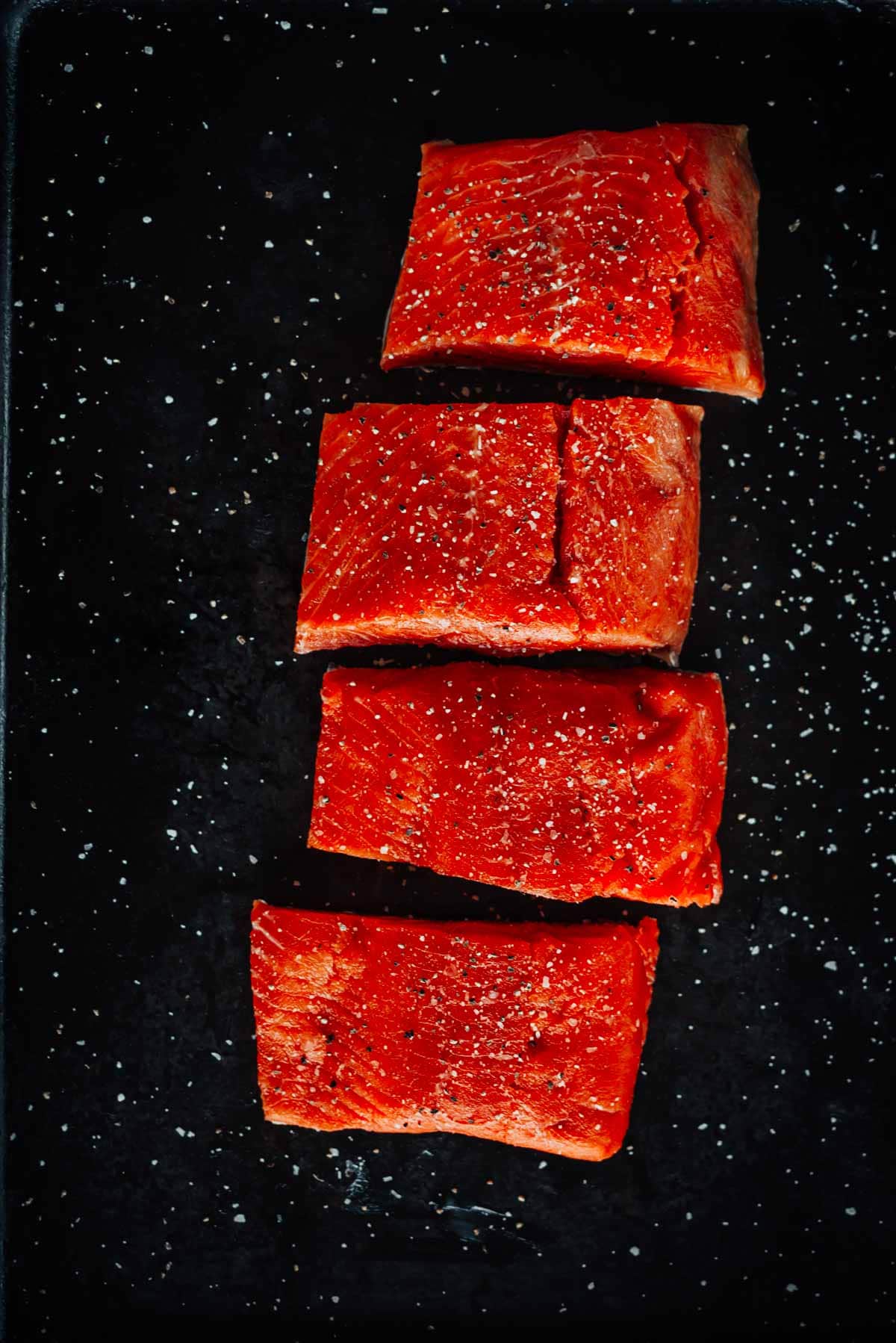
- Cut straight down perpendicular to the grain to create individual portions.
- Aim for 6–8 oz pieces, or whatever your recipe needs.
4. Keep thickness consistent
- The goal is even thickness, not perfect weight matches.
- Even thickness = even doneness.
- This is the single most important part of portioning.
5. Trim pin bones if present
- Run your fingers along the fillet to feel for bones.
- Use tweezers to pull them in the direction they’re angled, not straight up.
- This prevents tearing and preserves the clean shape.
📏 Portioning Tips by Cooking Method
Pan-searing
Portion pieces slightly thicker for better browning and control.
Grilling
Leave the skin on for structure and easy flipping.
Baking
Equal thickness matters more than anything else.
Tartare or poke
Use the trimmings or center-cut for clean, even cubes.
Once you learn to portion salmon properly, every recipe gets easier—and your cooking becomes dramatically more consistent.
Step-by-step guide for portioning salmon fillets into even pieces so they cook at the same rate and stay moist and tender.
Prevent your screen from going to sleep
Pat the salmon dry
Blot the salmon fillet on all sides with paper towels. Dry fish is easier to handle and gives you cleaner cuts.
Square off the tapered tailTrim the thin tail portion and set it aside for tartare, curry, or salmon cakes. This keeps the remaining fillet closer to one thickness.
Slice across the fillet
With the fillet lengthwise in front of you, cut straight down across the width of the fish to create individual portions, aiming for equal thickness pieces.
Adjust for cooking method
❓FAQs: How to Portion Salmon Fillets
How thick should salmon portions be?Aim for pieces with even thickness—that matters more than exact weight. Even thickness ensures the entire portion cooks at the same rate.
How big should each portion of salmon be?Most recipes call for 6–8 oz portions, but adjust based on cooking method and appetite.
Do I need to remove the salmon skin before portioning?No. For grilling and pan-searing, leave the skin on for structure and easier handling. Remove it if you’re slow-roasting or preparing raw dishes.
Why does the tail end cook faster?It’s thinner and contains less fat. Trimming the tapered end gives you more uniform pieces that don’t dry out.
What should I do with salmon trimmings?Trimmings are perfect for tartare, poke, salmon cakes, stir-fries, and quick sautés. Sometimes we fry up thin scraps just for snacks while we’re working.
How do I remove pin bones from salmon?
Run your fingers along the fillet to locate bones, then pull them out with tweezers in the direction they’re angled, not straight upward.
Can I portion frozen salmon?It’s best to thaw salmon in the fridge first. Cutting through partially frozen flesh leads to uneven portions and ragged edges.
More Salmon Basics
Want dishes that use these techniques? Explore all our Seafood Recipes.
Trending Products

MASTER COOK 3 Burner BBQ Propane Ga...

SUNLIFER Charcoal Grill Offset Smok...

Realcook Charcoal BBQ Smoker Grill:...

Cocktail Smoker Kit with Torch – ...

Grilling Accessories, Grill Tools, ...

BBQ Grilling Tools Accessories Set ...

SHIZZO Grill Basket Set, Barbecue B...

Odoland 18pcs Camping Cookware Larg...

Dr. Camp 9 PCS Grilling Accessories...
